This lift is one that has been very little practised on this side of the Atlantic, consequently very little has been accomplished. But in Britain the lift has developed into quite a science under the guidance of that remarkable lifter, W. A. Pullum. It was always considered an extraordinary feat for an athlete to swing his own body weight with one hand, but the English lifters have developed quite a few who have even succeeded in surpassing their body weight. In all the amateur divisions the British hold the swing records, and also hold the records in the bantam, feather, light and middleweight professional classes. The light heavy-weight record I have the honor to hold, and incidentally am the only American Continental athlete to ever swing my body weight, which I first performed as a middleweight, swinging 160 pounds at 154 pounds and later making a world’s record with 172½ pounds at 168 pounds. To Rigoulot of France is given the world’s heavyweight honor, which he won by beating Arthur Saxon’s record of 200 pounds by swinging 201 pounds.
This lift is a hard one to master, as it requires exceptional speed combined with great strength and timing, and practically is the key to all speed lifts. A lifter must have perfect control of his balance from the start to the conclusion of the lift. This may not seem so difficult on first reading, but the lifter goes through various changes in positions when performing this lift, that compel the body to be carried to acute angles.
The original ruling of this lift was that the dumb-bell should be kept at right angles to the body throughout the lift, and the arm should be kept perfectly straight, which is the manner in which all former records were performed. The British do not perform the lift this way. They are allowed to bend the arm, providing no arm push is used in fixing the bell overhead. It is not a swing in the true sense of the word, and in America the bent arm style is not favored. Much more weight can be raised in the British style, but my recent record was made with a straight arm, and if the bar had not been so bent with the fall it took on lowering it to the ground after the first attempt, I could have done 180 pounds which I did in practise. British style, I am sure I could do much more.
A dumb-bell should be secured with an inside grip of five inches, and care should be taken that collars are not used to keep the plates apart. A sleeve grip should be made so the plates can rest upon it at a distance of five inches apart.
The ideal height of the largest plate is eleven inches, and the edges of the plates should be beveled, while a swing gauntlet should be used in order to protect the arm.
There are different methods in arranging the balance of the plates, but the newest and most adopted by all the best swingers is what is termed the “back hang” style. More weight is loaded on the back end than the front, which compels the back end of the weight to hang or carry lower than the front end.
This arrangement has special advantages. Greater momentum is gained in the initial sweep from off the ground, and in the continuation of the swing, the back end being heavier, does not carry out so far. Instead it overbalances the lighter end, which allows the heavy end to hang upon the forearm, from which better control is gotten.
The excess poundage can be arranged to the lifter’s liking. I usually used an excess of thirty pounds; some use more and some less. But the “back hang” style I earnestly urge all “swingers” to master.
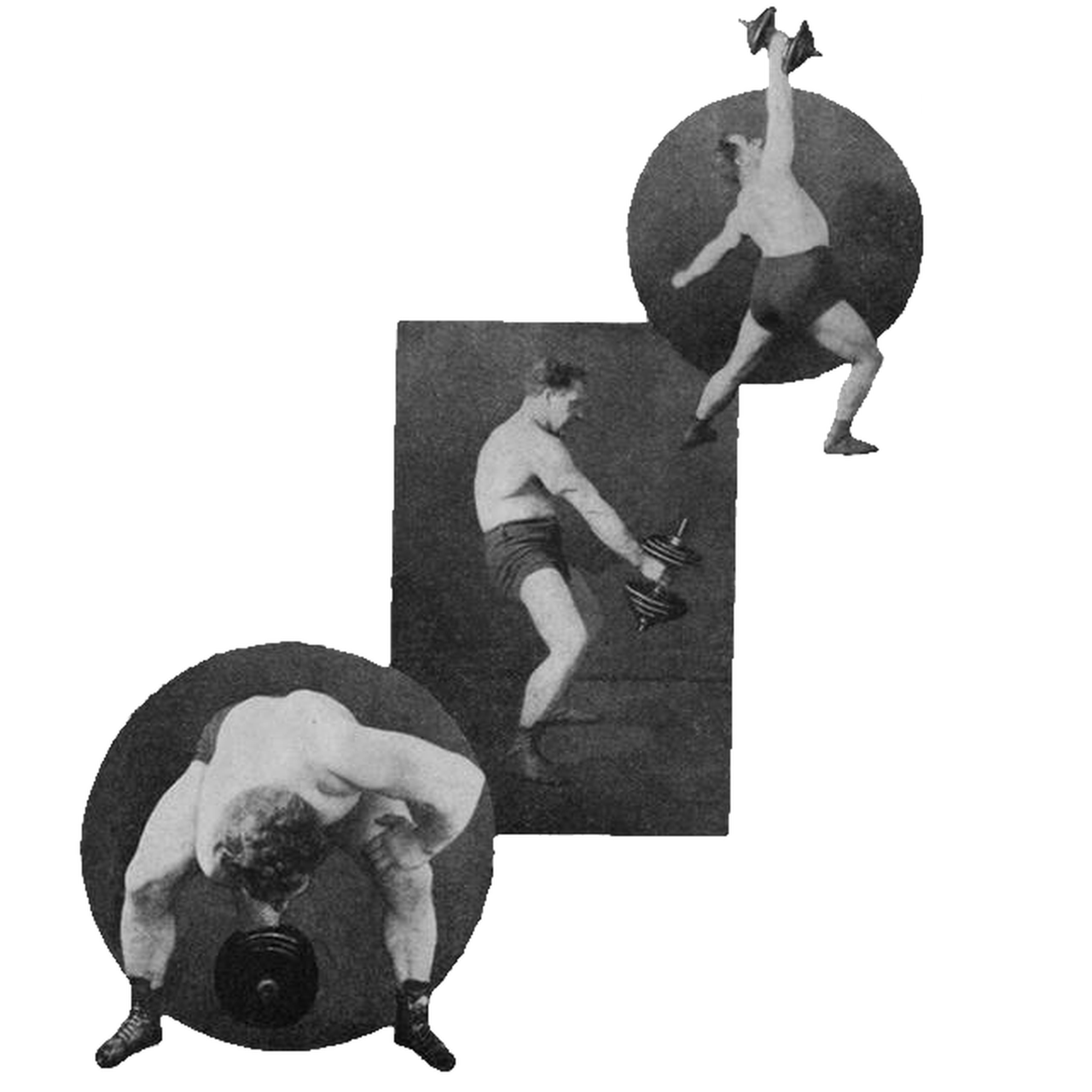
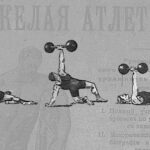
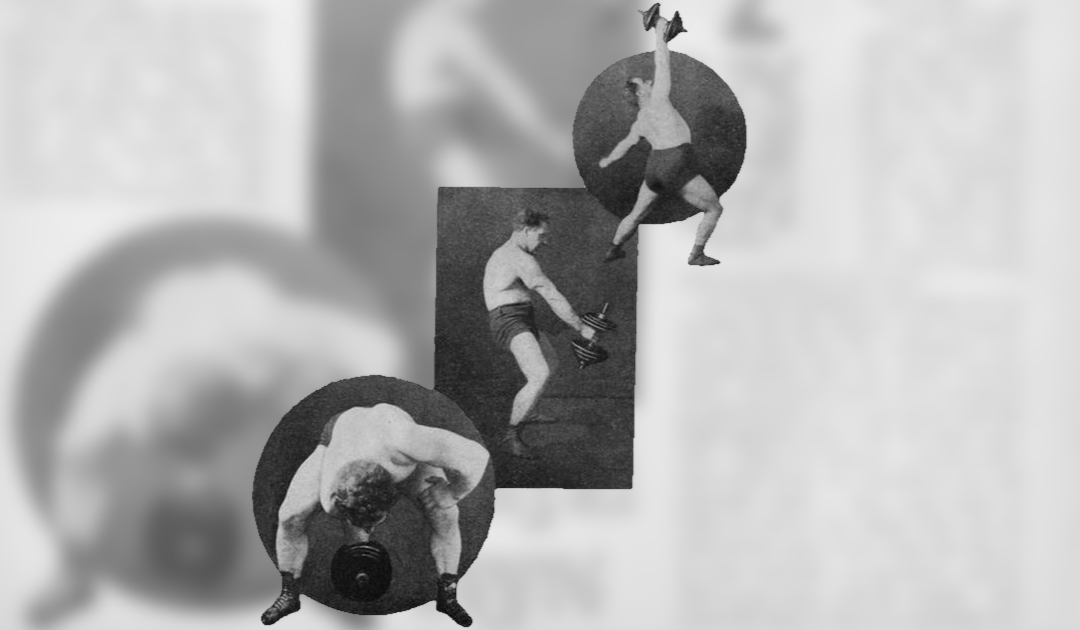
Image 1 (bottom): The commencement of the “One-Hand Swing.“ The front disc is level with the line of the heels.
Image 2 (middle): The weight in its flight, showing how it is carried on the forearm and the body thrown backward in order to counteract the forward pull.
Image 3 (top): The finish of the „swing,” showing the forward “thrust” style and the “back hang” method. Notice how the weight is carried on the front of the forearm.
Having loaded the bell, it should be placed back between the legs so that the front disc is on a line parallel with the heels. Grasp the handle as close up to the front disc as possible, and be sure to keep the arm straight. The back should be kept flat, with the buttocks low and knees well bent and the head comfortably up, looking straight forward. The disengaged hand should be placed upon the corresponding knee, with the fingers of the hand on the inside of the thigh.
The position of the feet, as adopted by myself, is that these be kept fairly wide apart, with the foot under the lifting arm a little further back of the other foot. This gives better cooperation in following up the “body thrust” in completing the lift.
The whole body should be allowed to lean forward, dragging on the weight, then with a terrific effort of the whole body heave forward, BUT as soon as you feel the heave forward die, immediately counteract by pulling backwards and straightening the back. If you don’t, the weight will carry you forward onto your toes, and the balance will be spoilt and you will not get very far with the weight.
You actually create a rocking movement with the body forward to carry the weight, and slightly backwards and upwards to counter the forward pull.
By pulling back the weight is kept more closely to the body and a better centralization is effected.
As soon as the weight is swept forward and the back pull made, I always step forward and sıdeways ın a vigorous lounging movement, with the legs and all my body power I apply in a thrusting effort behind the lifting arm, which acts like a prop on raising the weight overhead to its completion.
The forward movement of the leg takes the place of a dip, and the lifter is placed in a unique position, by which he can control the weight if it happens to be the least bit out of alignment by sinking into a deeper squat, but be sure to bring the disengaged hand upon the corresponding knee to steady your balance if such happens.
The opposite foot to the lifting hand should not move, as the movement is done with the lifting leg. Also do not grip the bar with the first two fingers of the hand. It is not necessary, and the relaxed grip of the two fingers allows for the little play made as the bell is carried forward.
Some “swingers” adopt the squat without any foot change, but for various reasons I do not approve of that for this lift. Also some find it to their advantage to swing the weight forward and upward by straightening the back and legs, and thus gather momentum for the final effort, by allowing the bell to come between the legs and immediately crash into the lift.
I never could perform this to an advantage, as I am short in stature and have a longer body in proportion to the length of my legs, and on lowering a weight it would always strike the floor.
There are two other ways by which momentum can be gained, which are much better than the method just mentioned, but space compels me to reserve them for some future discussion of this fascinating lift, which, with the snatch, is the prettiest and cleverest lift as far science is concerned in lifting weights.
- George F. Jowett, in: Strength, 8, 1925, p. 62; 85-86.
 [ONLINE COURSE] Enter the Dumbbell!: Old-School Lifting for Modern Strength
CLICK HERE!
-
Sale!

GGP: The Great Gama Protocol [ONLINE COURSE]
Original price was: $149.$99Current price is: $99. -
Sale!
THE FORGE: Full Year’s Transformation Program [ONLINE COURSE]
Original price was: $499.$249Current price is: $249. -
60 Minutes Online Private Lesson
$99 -

Hard Style Dumbbell Swing [VIDEO+MANUAL]
$0 -

StrongFirst RESILIENT—Chelmsford, United Kingdom—March 21-22, 2026
$795 -
Sale!
SFB StrongFirst Bodyweight Instructor Certification – Prague, Czechia, April 18-19, 2026
Price range: $1095 through $1295 -
![Enter the Dumbbell! [ONLINE COURSE]](https://simplexstrong.com/wp-content/uploads/2025/12/strongfirst-enter-the-dumbbell-400x400.jpg)
Enter the Dumbbell! [ONLINE COURSE]
$149 -
Sale!
SFG II StrongFirst Kettlebell Instructor Certification – Prague, Czechia, October 10-11, 2026
Price range: $895 through $1295