Since I was nought but a little hammer, there have been a few key “strength epiphanies” that have shaped the way I view strength and how to obtain it.
One of the best ones comes from Israeli movement maestro, Ido Portal – the man made famous by his incredible movement abilities, and rendered a celebrity by being tapped as Conor McGregor’s movement coach when he was in the UFC (and in case you didn’t see it, McGregor plays the baddie in the Roadhouse remake as well).
Here’s what Portal said in a Facebook post a few years back that changed the way I train and teach:
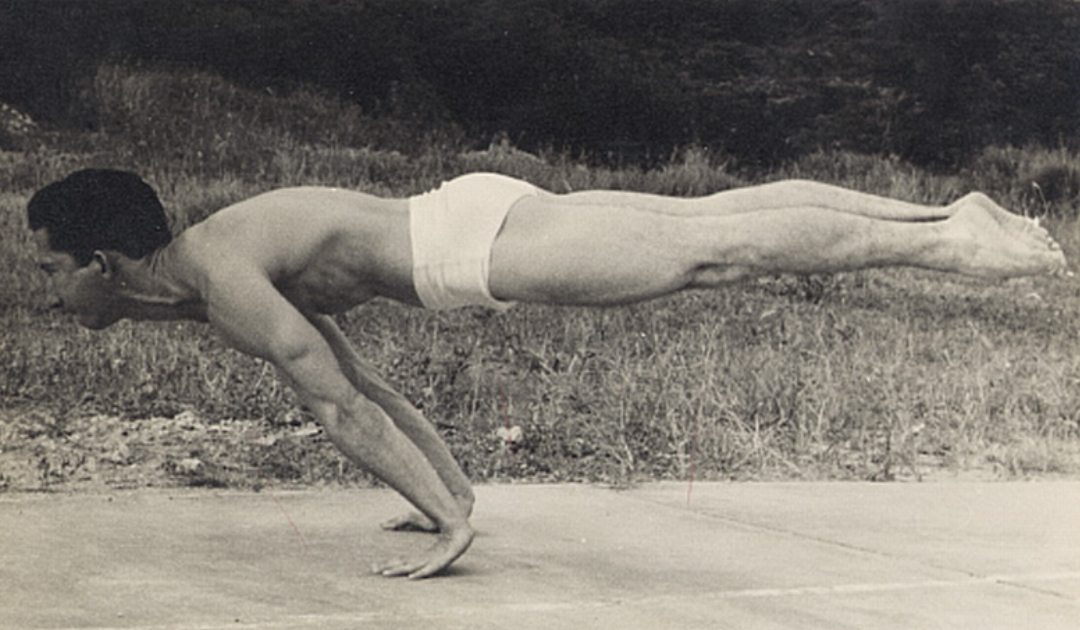
Over the last few years I’ve come to a very important realization about upper body strength – I came to realize that someone who is strong in the muscles surrounding the scapulae is an upper body strong person in any endeavor, or if he is not yet strong in one specific discipline, he will be able to transform his strength into this new arena after a very short ‘transformation phase’. This is one reason why ex-gymnasts are able to transform their strength into various other fields after retiring and very quickly.
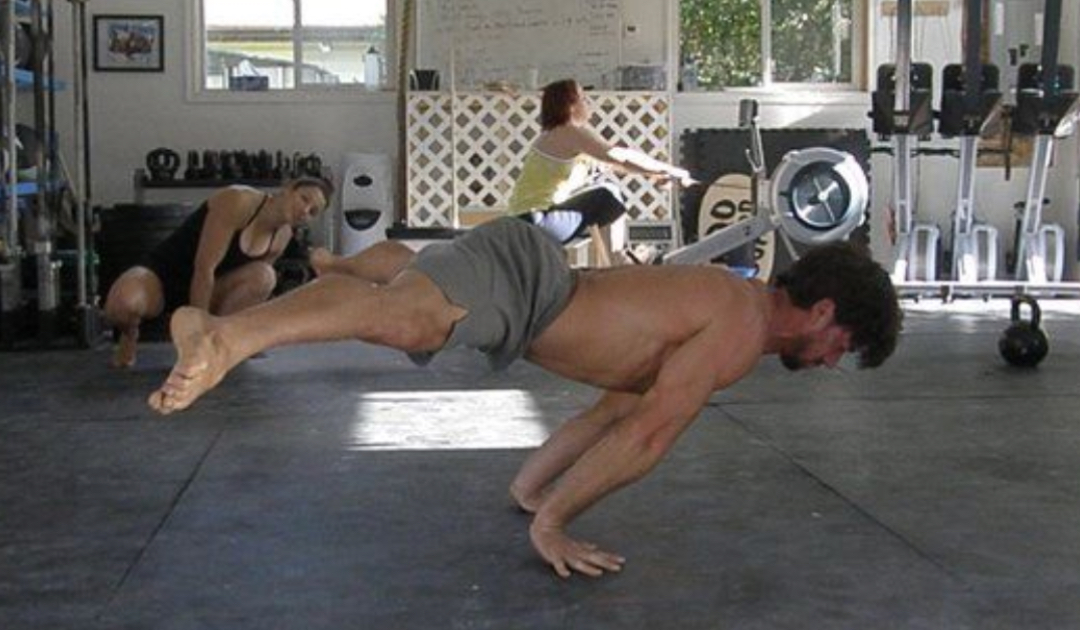
Ido Portal defying gravity
Translation: strengthen the muscles surrounding your scapulae and you’ve got the keys to the kingdom for epic upper body strength.
A Few Examples
Dr. Fred Hatfield, founder of one of America’s most respected personal trainer certification bodies, the International Sports Sciences Association (ISSA), is perhaps best known for his record-breaking run as a powerlifter.
At age 45, he broke a then-untouched world record by becoming the 1st sman to squat over 1000 lbs in competition (1,014 lbs, just in case anyone’s counting).
As a youth, he got his start as a gymnast, pulling off such incredible maneuvers as iron crosses with ease.
 Future 1,000 lb squatter Dr. Fred Hatfield in his element
British wrestler and all-around bad mofo Bert Assirati was a strength and power phenom.
Despite being best known as a highly skilled and fearsome wrestler, in his day he was also renowned for his unreal levels of strength.
- He deadlifted 800 lbs in 1938 – an almost unheard of weight in those days
- He could do a 200 lb barbell pullover while laying flat on his back – a move so stratospherically difficult you’d be hard pressed to find ANYONE today who could do it
But perhaps most impressive was his bodyweight strength.
As a youth, he got his start in gymnastics and hand balancing – two skills which laid a foundation for his incredible success in both wrestling and iron training.
Not only did he follow the precise path Ido Portal observed years ago and turn those incredible skills into a bankable profession, but despite ballooning up to 240 lbs of bodyweight (an absolute titan back in his day), he was able to do multiple one-arm chin-ups per arm and could even perform the Iron Cross on rings – easily the heaviest man to ever do so.
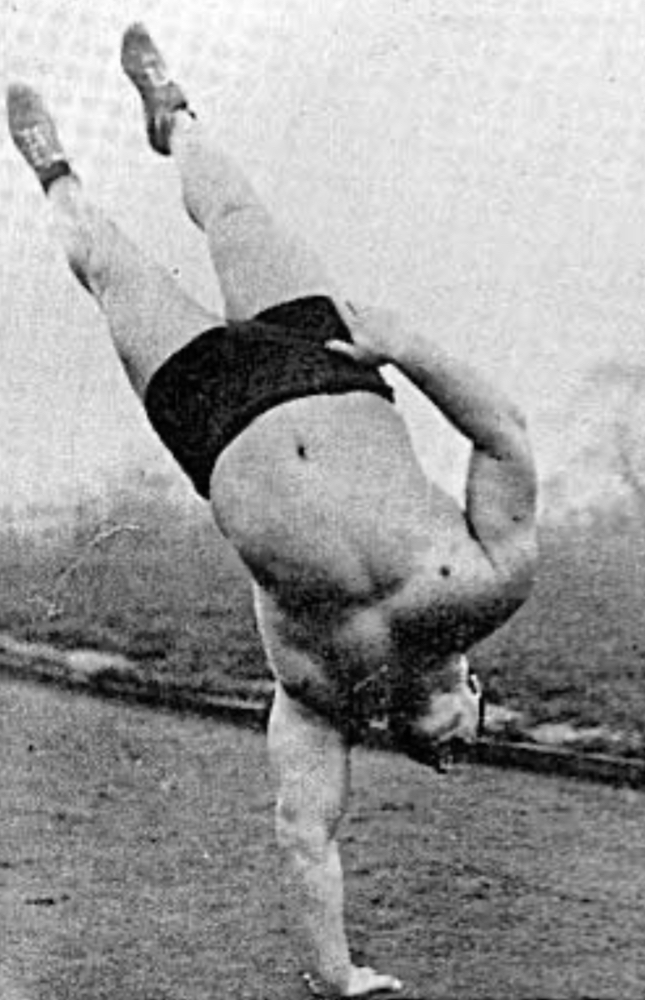
Legend has it that he wasn’t actually doing a one-arm handstand, but rather got into a wrestling match with the Earth itself and successfully pinned it for a 3-count
A little closer to home for the kettlebell crowd, StrongFirst Master Instructor Emeritus Mark Reifkind also famously started his athletic career by training as a gymnast. In his heyday he was so good he even went head to head against Kurt Thomas, who went on to represent the US in the Olympics in 1976 and in 1979 won six medals at the world championships – a record which stands to this day.
After his gymnastics career, Reifkind went on to compete at a high level in triathlons, marathons, and ultra marathons; he competed in bodybuilding and trained with the legendary Scott Wilson; he competed in powerlifting, coached the American women’s team, and even wrote an article on stone lifting that appeared in the same issue of MILO magazine as Pavel’s breakthrough article Vodka, Pickle Juice, Kettlebell Lifting, and Other Russian Pastimes.
The list could keep going on and on, but by now I think you get the picture.
“This is all well and good,” you might be saying, “but I wasn’t lucky enough to be put in gymnastics as a kid and all these straight arm movements like front levers and iron crosses and stuff look absolutely impossible for me at my age.”
Do not despair, friend-o.
You don’t need to have been a young gymnast (or even be young) to get some incredible benefits from straight-arm scapular training any more than you need to have a double bodyweight deadlift to start barbell training or a ½ bodyweight one-arm military press to start kettlebell training.
Just like with kettlebells and barbells, straight arm strength training has entry points that allow you to go from ‘chump’ to ‘champ’ methodically, progressively, and most importantly effectively by manipulating a different type of resistance:
Leverage.
In much the same way that a brand-new trainee might do pushups with his or her hands on an elevation to build up enough strength to do regular pushups, you can similarly use progressions of the major straight-arm drills that build up the foundation of strength that you need to not just work up toward harder progressions later, but most importantly…
Carry over into your kettlebell, bodyweight, and barbell training!
13 years ago, when I started tinkering with straight-arm scapular work, I was doing primarily the most basic of progressions – yet the carryover I saw into my kettlebell work was undeniable.
Case in point: my Sots press.
A Sots press is a particular type of press where you get into a rock bottom front squat position and THEN press the weight overhead.
My best effort previously was a pair of 16 kg (35 lb) kettlebells. Then, after a few months of straight arm work and ZERO Sots pressing, I was able to knock out a single rep with a pair of 28 kg (62 lb) kettlebells!
It was no easy feat, as you’ll see in this video, but it wasn’t even in the realm of possibility before.
(Viewer Advisory: I decided to do this video in my underwear for some reason. You’ve been warned…)
No big surprise if you read my previous article where I detailed the well-established carryover that gymnasts enjoy from their rigorous gymnastics practice to quite literally any other physical discipline they take on upon retirement.
You, however, don’t have to retire from your own training protocol to start getting the incredible benefits of straight-arm strength training.
You can start making dynamite gains by adding a simple routine of foundational straight-arm work to your existing program and reap the rewards in short order.
My 21-day Kick SASS challenge will show you how. Details HERE!
Here’s what one chap, Reinhard, had to say about his experience using Kick SASS in his workouts:
Hi Aleks, at last, here is my review, which you well deserve. Bottom line: This program is the phenomenal game changer for me. Never before have I experienced such a significant development in such a short time, and I am around for a while.
Carryover #1: Despite doing pull-ups for more than fifty years now and being fairly strong, I always had trouble getting my head over the bar. After ten days following your kick SASS, my head flew over the bar. Effortless!
Carryover #2: Swimming. My freestyle and backstroke are much stronger. The propulsion is a lot better with less effort. Congratulations for your excellent job. I will stick to these exercises and include them in my warm-up for the grinds. yours truly Reinhard
Gravity can wait – gains await!
Have fun and happy training!
Aleks Salkin






The link for the “course” is not working. Would like to learn more about the straight arm strength routine. Thanks.
Fixed!