A familiar exercise can offer a fresh challenge with a small change in how you distribute your bodyweight.
In Monte Saldo’s Maxalding: For Health, For Strength, two variations put that idea to work: a pushup with more weight on one arm during the descent, and a squat with more weight on one leg during the ascent.
For SIMPLEXSTRONG readers, the appeal is straightforward: familiar movements, no equipment, and attention to how each repetition is performed. Here are Saldo’s complete instructions, with the original wording preserved.
The pushup with an uneven descent
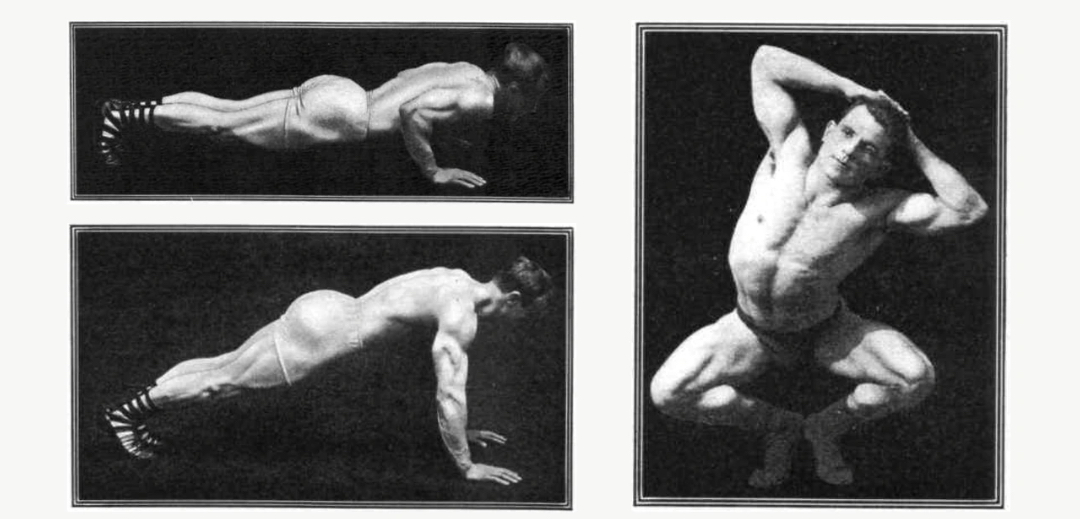
Press up with both arms sharing the load, then shift more weight to one arm as you lower. Alternate sides. The supporting arm stays involved; this is a way to vary the load within a two-arm pushup.
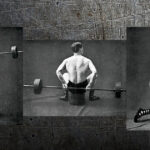
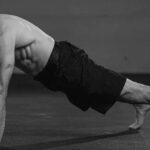
Assume the position indicated in the first illustration. Then simultaneously with a deep inspiration of the breath, press up speedily and powerfully into the position indicated in the second illustration.
Retain the position until you have fully exhaled the breath, and then as you begin to inspire again, lower the body slowly to the ground with the weight supported mainly with the left arm, which can easily be accomplished by carrying the body to the left.
Regain the position shown in the second illustration by pressing up speedily again with the weight evenly distributed on both arms upon the re-inspiration of the breath.
Then return to the position of the first illustration again, with the weight supported this time mainly upon the right arm.
…
When pressing up, the weight is distributed evenly upon both arms. When lowering, the weight is supported mainly upon one arm.
This obviates the necessity for a large number of repetitions, and of course almost the whole of the weight may be taken upon one arm if necessary.
The squat with an uneven ascent
The squat reverses the emphasis: descend with the weight shared between both legs, shift toward one leg at the bottom, then rise. Alternate the working side on successive repetitions.
Keeping the upper-body upright, lower slowly into a squatting position. Then tilt the weight of the body over on to the left leg as indicated in the illustration. With a full inspiration, rise slowly to the erect position. Lower again to the squatting position with the weight evenly distributed on both legs, and repeat the rise with the weight tilted over on the right leg. Only a few repetitions are required for this exercise, particularly if great mental concentration is used to keep the leg that is lifting from shaking or wobbling.
This method of performing this exercise is infinitely superior to the old-fashioned style of repetition with the weight evenly distributed on both legs all the time. Finish, however, with a few speedily executed repetitions with the weight evenly distributed, to accustom the mind to speedy action. Under no circumstances must the breath be held during this exercise, as the great muscles of the legs use a lot of blood, and speedy blood-oxygenation is a necessity. If this exercise be used just before retiring at night, the legs can be massaged in bed afterwards, and so kept supple. When in the squatting position, relax the thigh muscles for a moment before rising. This will allow perfect blood-irrigation, and will also give greater control of the balance.
From an interesting variation to a regular practice
Both examples invite us to pay closer attention to a basic movement: where the weight goes, how fast we move, and how well we control the repetition. Small changes can give familiar exercises a different character. That is one reason these old physical-culture books remain worth reading.
For a structured bodyweight practice, explore GGP: The Great Gama Protocol. The online course teaches famous Hindu pushups, Hindu squats and more, with exercise progressions and programming you can use for a morning recharge or a standalone routine.
Health & Strength!
- Source: Monte Saldo, Maxalding: For Health, For Strength, published by Maxalding, 14 Cursitor Street, London, E.C.4.; Exercise 16, pp. 58–59, and Exercise 25, pp. 74–75.
GGP and all other SIMPLEXSTRONG online courses are discounted through Sunday, December 6. No discount code needed.
CLICK HERE!