Most people think “exercise” has to look like exercise: a scheduled session, a change of clothes, equipment, a plan.
Current research adds a powerful (and very real-life-friendly) option: brief bursts of hard effort tucked into your normal day—minutes, not hours.
In a large UK Biobank analysis using wrist accelerometers, researchers focused on people who didn’t do structured exercise and asked a simple question: Do short bouts of truly vigorous movement still matter?
They do.
Those brief, high-effort spikes—like taking stairs with intent or walking very fast to catch a bus—are called vigorous intermittent lifestyle physical activity (VILPA): short (often up to 1–2 minutes), sporadic, but genuinely vigorous movement that happens as part of life.
The Benefits Hard to Ignore
Compared with people who recorded no VILPA, those who accumulated about three short bouts per day (each around 1–2 minutes) showed associations with:
- ~38–40% lower all-cause and cancer mortality risk
- ~48–49% lower cardiovascular (CVD) mortality risk
Even the median total of about 4.4 minutes/day was associated with:
- ~26–30% lower all-cause and cancer mortality risk
- ~32–34% lower CVD mortality risk
Important nuance: these are observational findings, so they don’t “prove” cause and effect—but the dose-response pattern (more VILPA → lower risk) is compelling.
“Just 3 minutes” Can Matter—Especially for the Heart
A separate accelerometer study looked at major adverse cardiovascular events (MACE) and found a strong signal in non-exercising women. Women averaging ~3.4 minutes/day of VILPA had a hazard ratio of 0.55 for overall MACE (about 45% lower risk) vs no VILPA. The same paper reported similarly strong associations for outcomes like heart failure in women at that dose.
Lowering the Cancer Risk
Another UK Biobank accelerometry study examined cancer incidence (risk of diagnosis) in non-exercisers and found that small daily amounts of VILPA were associated with lower risk:
-
Around 3–4 minutes/day was associated with lower total incident cancer risk
-
Roughly 4–5 minutes/day was associated with lower incidence of “physical activity–related” cancers (a predefined group).
The Takeaway
If you can accumulate a few micro-bursts of true intensity—minutes, not hours—you can meaningfully improve your “activity tally” for the week, and potentially move the needle on long-term health outcomes. Every minute counts—if it’s intense enough.
What counts as “vigorous” in real life? A simple field test:
- You’re breathing hard
- You can speak only in short phrases
- Your legs notice
VILPA “Program”: A Simple Way to Start (No Gear Required)
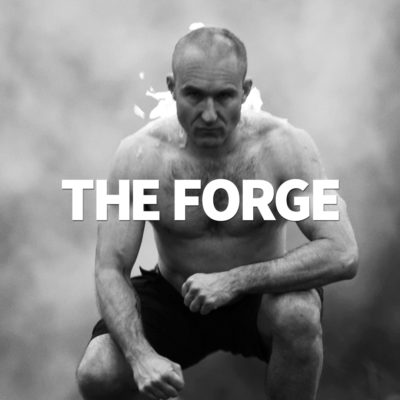
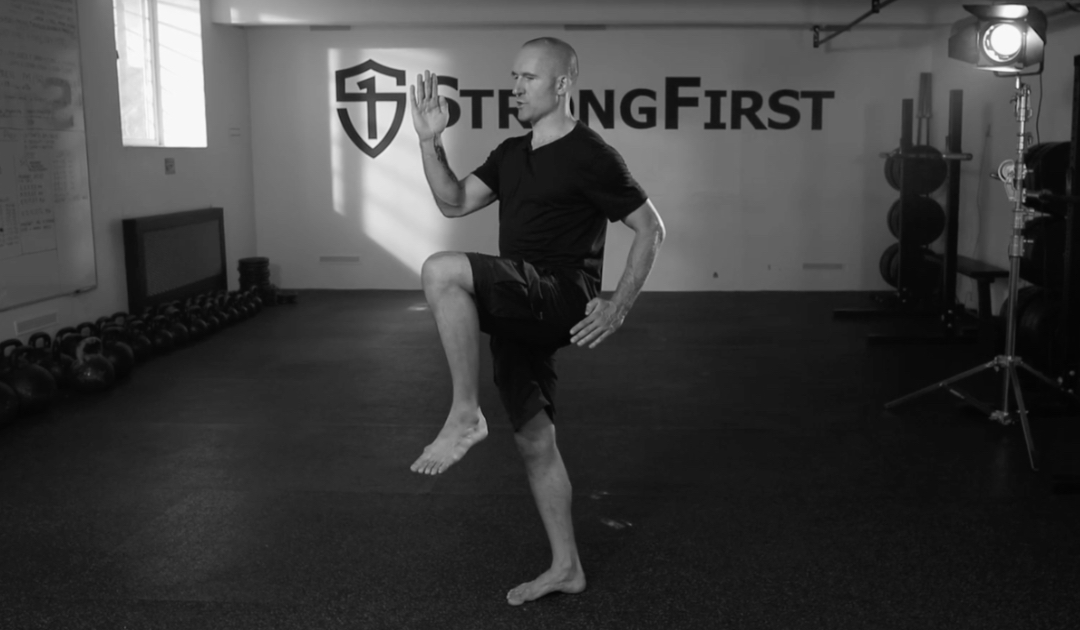
My two go-to options at home are Hindu squats and/or the 100-Up Running Exercise—both taught inside THE FORGE: Full Year’s Transformation Program.
- Do 3+ bouts/day of 60–90 seconds
- Pick one – Hindu squats or 100-Ups – or mix and match
- Drop them into your day (morning/midday/evening), then go right back to normal life
Start conservatively if you’re coming from zero. If you have cardiovascular risk factors, joint issues, or you’re unsure what “hard” should feel like, scale the effort and consult a qualified professional.
Exclusive New Year Offer
As a New Year gift, we’ve unlocked both lessons so you can start immediately. And we’re offering an exclusive 50% discount on the full course through January 31.
Because the best program is the one that survives contact with real life.
Primary research cited
- Stamatakis E, et al. “Association of wearable device-measured vigorous intermittent lifestyle physical activity with mortality.” Nature Medicine (2022).
- Stamatakis E, et al. “Device-measured vigorous intermittent lifestyle physical activity (VILPA) and major adverse cardiovascular events: evidence of sex differences.” British Journal of Sports Medicine (2025).
- Stamatakis E, et al. “Vigorous Intermittent Lifestyle Physical Activity and Cancer Incidence Among Nonexercising Adults: The UK Biobank Accelerometry Study.” JAMA Oncology (2023).


![Enter the Dumbbell! [ONLINE COURSE]](https://simplexstrong.com/wp-content/uploads/2025/12/strongfirst-enter-the-dumbbell-400x400.jpg)